
All Terrain Crane Rental in Rockford, IL: Solutions for Demanding Lifting Projects
Industrial construction, equipment installation, and infrastructure projects often require lifting equipment that can operate safely across varying ground conditions. When a job site presents challenges such as uneven terrain, limited access, or heavy lifting requirements, an all-terrain crane can provide the mobility, lifting capacity, and operational flexibility needed to complete the work efficiently.
For contractors and industrial businesses in Northern Illinois, all-terrain crane rental in Rockford, IL offers a practical solution for projects that require versatile lifting capabilities without the expense of purchasing and maintaining specialized equipment. Selecting the right crane rental provider helps ensure that lifting operations are planned carefully, equipment is suited to the job, and project schedules remain on track.
At Midwest Crane & Rigging, we deliver safe, reliable, and professional crane rental and rigging solutions for a wide range of industries. Understanding the capabilities of all terrain cranes and the factors involved in selecting rental equipment can help businesses make informed decisions for their next lifting project.
What Is an All Terrain Crane?
An all-terrain crane is a mobile crane engineered to travel on public roads and operate at designated job sites with varying surface conditions. These cranes combine the road mobility of truck-mounted cranes with features designed for off-road travel and demanding construction environments.
Depending on the model, an all-terrain crane may offer multiple axles, all-wheel drive, advanced suspension systems, telescopic booms, and extendable outriggers. These features help the crane travel between locations and establish a stable working configuration when lifting heavy loads.
All-terrain cranes are commonly used when a project requires both transportation flexibility and substantial lifting capacity. However, their suitability depends on the load weight, lifting radius, boom configuration, ground conditions, and site accessibility.
Benefits of All Terrain Crane Rental in Rockford, IL
Renting an all-terrain crane allows businesses to access specialized lifting equipment according to project requirements. Instead of investing in a crane that may only be needed occasionally, companies can arrange equipment for specific jobs and coordinate rental schedules with construction or industrial operations.
- Versatility Across Different Job Sites
Industrial and construction sites rarely have identical operating conditions. Some projects take place on paved commercial properties, while others involve gravel access roads, uneven ground, or partially developed construction sites.
All terrain cranes are designed to handle a broader range of travel conditions than conventional road-oriented mobile cranes. Their capabilities make them useful for projects where equipment must move between locations or reach designated lifting areas with changing surface conditions.
A site assessment remains essential because soft soil, steep grades, restricted access, and other obstacles can limit crane movement and setup.
- Efficient Heavy Lifting Operations
All-terrain cranes are available in different configurations and lifting capacities, allowing contractors to select equipment appropriate for their project requirements. They can support the placement of industrial machinery, structural components, mechanical equipment, and other heavy materials.
The crane’s rated capacity alone does not determine whether a lift is feasible. Actual lifting capacity depends on factors such as boom length, working radius, counterweight configuration, outrigger positioning, and load characteristics.
Professional lift planning helps establish whether the selected crane can safely perform the required lift under the expected operating conditions.
- Improved Project Scheduling
Equipment delays can affect multiple stages of a construction or industrial project. Arranging crane rental in advance helps project managers coordinate deliveries, equipment installation, structural assembly, and other lifting-dependent tasks.
An all-terrain crane may reduce the need to coordinate separate equipment for road travel and certain off-road access requirements. This can simplify logistics when the crane’s capabilities match the project and local site conditions.
Rental scheduling should account for transportation, crane setup, rigging preparation, required inspections, and any permits or access restrictions that apply.
- Access to Specialized Equipment Without Ownership Costs
Purchasing an all-terrain crane involves significant capital investment, along with ongoing expenses for maintenance, inspections, storage, transportation, and operator qualifications.
For companies that do not require this equipment continuously, renting can provide access to the necessary lifting capabilities without taking on the full costs of ownership. It also allows project teams to evaluate equipment requirements based on the demands of each job.
The most cost-effective rental arrangement depends on project duration, crane availability, mobilization requirements, and the scope of work.
Common Applications for All Terrain Cranes
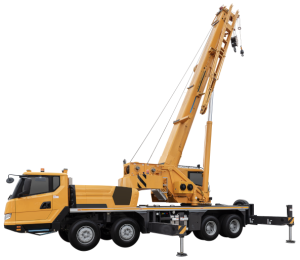 Businesses seeking all terrain crane rental in Rockford, IL, may need lifting support for a range of industrial, commercial, and construction applications.
Industrial Machinery Installation
Manufacturing facilities frequently require heavy equipment to be positioned with precision. Production machinery, presses, industrial processing systems, and other large components may need to be lifted from transport vehicles and placed on prepared foundations.
Successful machinery installation requires coordination between crane operations, rigging personnel, equipment installers, and facility management. Load dimensions, center of gravity, access routes, overhead obstructions, and final positioning requirements should be evaluated before lifting begins.
Construction and Structural Assembly
Construction projects often involve lifting steel beams, structural assemblies, precast components, and building materials into designated positions. An all-terrain crane may be suitable when the site requires a combination of road mobility, lifting reach, and the ability to operate on approved construction surfaces.
Crane selection should reflect the heaviest anticipated load, required lifting radius, building height, and space available for setup.
Commercial and Industrial Equipment Replacement
Replacing rooftop mechanical systems, generators, transformers, and other large equipment may require a crane capable of reaching over existing structures or obstacles.
These projects often involve tight schedules and limited access to operating facilities. A coordinated lifting plan can help reduce disruption by accounting for equipment delivery, work-area restrictions, personnel positioning, and the sequence of installation activities.
Infrastructure and Site Development
Certain infrastructure and site development projects require lifting equipment that can reach designated work areas across changing ground conditions. Depending on site access and engineering requirements, all-terrain cranes may support the installation of structural elements, mechanical systems, and other heavy components.
Ground-bearing capacity, underground utilities, overhead power lines, and surrounding traffic must be considered before the crane is positioned.
How to Choose the Right All Terrain Crane
Selecting the appropriate crane is one of the most important decisions in planning a lifting operation. Choosing equipment based only on the load’s weight can result in inadequate capacity, unnecessary expense, or unsafe working conditions.
Consider the following factors when arranging crane rental.
Load Weight and Dimensions
Determine the total load weight, including any rigging hardware and lifting accessories that must be accounted for in the applicable load calculations. The load’s dimensions and center of gravity also influence how it must be attached, balanced, and controlled during lifting.
Accurate load information helps the rental and rigging team evaluate equipment requirements before mobilization.
Lifting Radius and Height
The lifting radius is the horizontal distance between the crane’s axis of rotation and the load’s lifting point. As the radius increases, a crane’s available lifting capacity generally decreases.
Project teams should establish the required lifting height, horizontal reach, and final placement location. These measurements help determine the appropriate crane configuration and whether the planned lift falls within the crane’s rated capacity.
Ground Conditions and Site Access
An all-terrain crane’s mobility does not eliminate the need for proper ground preparation. The supporting surface must be capable of accommodating the loads imposed by the crane, including concentrated forces beneath its outriggers.
Site evaluations should identify soft soil, slopes, buried utilities, underground structures, drainage features, and potential obstructions. Outrigger mats or other engineered ground-support measures may be necessary based on the conditions and applicable requirements.
Space for Crane Setup
Crane setup requires sufficient room for positioning, outrigger deployment, boom movement, and safe separation from nearby structures and hazards.
Restricted industrial yards, active production areas, and congested construction sites may require additional coordination. A site review can help determine whether the selected crane can be positioned and operated as planned.
Project Duration and Scheduling
Rental requirements vary depending on whether the lift involves a single-day installation, a multi-phase construction project, or recurring industrial work.
Confirm the expected rental period, mobilization and demobilization arrangements, site readiness, and coordination with other contractors. Providing this information early helps the rental provider evaluate equipment availability and scheduling requirements.
Safety Considerations for All-Terrain Crane Operations
Crane safety depends on equipment suitability, competent personnel, appropriate planning, and controlled job-site conditions. Even a crane designed for demanding terrain must operate within its rated capabilities and applicable safety requirements.
Key considerations include:
- Lift planning: Establish load weights, lifting radii, crane configuration, rigging requirements, and the intended load path before work begins.
- Ground stability: Verify that the crane’s supporting surface can withstand the expected loads and that outriggers are deployed according to the manufacturer’s instructions and lift plan.
- Rigging inspection: Check slings, shackles, hooks, and other lifting accessories for suitability, condition, and rated capacity.
- Personnel qualifications: Ensure crane operators, riggers, and signal persons have the qualifications and training required for their assigned duties.
- Overhead hazards: Identify power lines, structures, and other obstructions that could interfere with crane movement or load handling.
- Weather conditions: Evaluate wind, visibility, and other environmental factors that may affect safe crane operation.
- Work-zone control: Establish appropriate exclusion zones and communication procedures to keep personnel clear of suspended loads and hazardous operating areas.
Applicable regulations, manufacturer guidance, and site-specific requirements should govern every lift. When conditions change, the operation should be reassessed before work continues.
Why Work With a Professional Crane Rental and Rigging Provider?
Successful crane operations require more than access to lifting equipment. Contractors and facility managers also need to coordinate rigging requirements, site conditions, transportation, and the sequence of work.
A professional crane rental and rigging provider can help evaluate the scope of a project, identify relevant equipment requirements, and coordinate the lifting resources needed for the job. Clear communication before mobilization can also help identify access limitations, scheduling conflicts, and other issues that might otherwise delay operations.
Midwest Crane & Rigging provides safe, reliable, and professional crane rental and rigging solutions for a wide range of industries. For businesses planning heavy lifting work in Rockford and surrounding Northern Illinois communities, working with an experienced provider can help support organized project execution and a safety-focused approach.
When requesting a rental quote, be prepared to provide the load specifications, required lifting height and radius, job-site address, ground conditions, access restrictions, and anticipated work dates. These details help determine the equipment and planning resources needed for the project.
Arrange All Terrain Crane Rental in Rockford, IL
Choosing the right all-terrain crane can make a significant difference in the planning and execution of industrial installations, construction activities, and heavy equipment handling. By evaluating load requirements, lifting geometry, ground conditions, and site access in advance, project managers can select equipment that meets the technical demands of the job.
For companies seeking all-terrain crane rental in Rockford, IL, Midwest Crane & Rigging offers professional crane rental and rigging solutions designed to support a wide range of industrial and construction needs. Contact the team to discuss your upcoming project, review your lifting requirements, and determine the appropriate equipment for your site.